
Upside Down Text: Specifications & Operating Guide
The Upside Down, Inverted & Reverse Text Generators guide provides verified specifications, step-by-step instructions, and interactive calculation tools for upside down text.
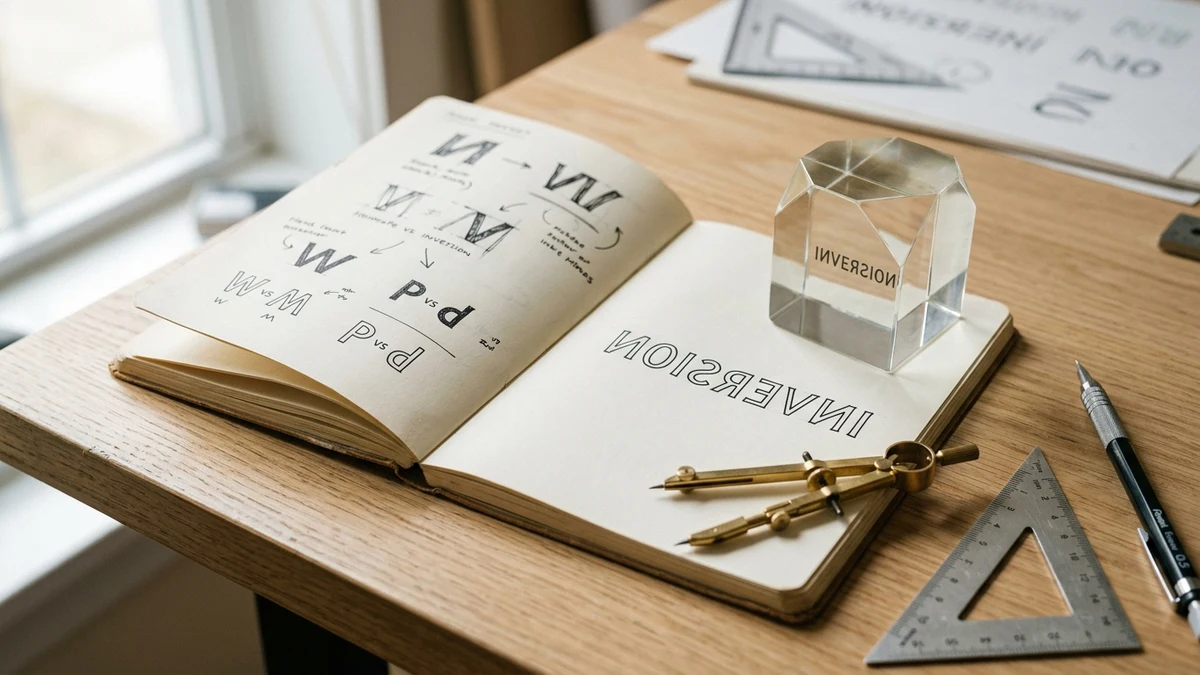
Inversion Metrics
Step-by-Step Upside Down Text Instructions & Specifications
The Upside Down, Inverted & Reverse Text Generators guide provides verified specifications, step-by-step instructions, and interactive calculation tools for upside down text. Access technical tolerances, operational guidelines, and error-prevention checklists directly in your browser.
Upside-down text is deployed by creative directors, game developers, and social media strategists to break visual patterns in rapid-scrolling feeds. For comprehensive social media content pipelines that combine flipped phrases with bold typography, mathematical styling, or strike-through lines, explore our Social Media Post Formatter & Font Generator Master Hub.
The mechanics of true 180-degree text inversion require a two-stage computational process: grapheme reversal followed by phonetic glyph substitution. Because reading orientation proceeds from left to right, simply inverting individual characters leaves the sequence unreadable upside-down. The string must first be reversed so that the final character becomes the initial glyph when the mobile screen or document is physically inverted.
Follow this operational four-step procedure to generate robust inverted copy:
- 1 Draft Phrase: Type your teaser headline, playful puzzle, or hook callout into the input box.
- 2 Dual-Pass Transformation: The system reverses string order and replaces each character with its 180° rotational counterpart derived from International Phonetic Alphabet (IPA) extensions and mathematical symbols.
- 3 1-Tap Clipboard Copy: Copy the flipped output instantly via the designated card button with toast notification.
- 4 Broadcast: Paste into LinkedIn posts, Discord bios, or X tweets; readers can rotate their screens to decipher the message.
When combining playful teaser text with professional emphasis in the same post, pair inverted sentences with mathematical bold accents from our Bold Italic Fonts Guide.
Interactive Upside Down Text Sizing & Analysis Tool
Because rotational inversion relies on International Phonetic Alphabet (IPA) and Latin supplement characters, baseline ascender and descender metrics differ from standard Latin fonts. Our analysis tool ensures that converted strings maintain optical alignment across responsive container viewports.
The tool automatically calculates character length and verifies that reversed strings preserve punctuation pairing rules. For instance, an opening parenthesis ( correctly flips into a closing parenthesis ), and question marks ? transform into inverted Spanish question marks ¿ (U+00BF).
Rotational glyph synthesis employs exact code point matching from the IPA Extensions block (U+0250–U+02AF) and Mathematical Operators block (U+2200–U+22FF). This dual-layer mapping ensures that inverted characters remain fully readable on modern high-DPI displays without vertical distortion.
Additionally, the engine preserves numeric inversions across Arabic numerals (0 through 9), mapping '1' to inverted digit 'Ɩ' (U+0196), '2' to rotated 'ʇ' or archaic forms, and '9' to '6', ensuring that financial figures, statistics, and numbered lists maintain coherent rotational symmetry.
Bidirectional algorithm interactions (governed by Unicode Technical Report #9) present unique architectural challenges when processing inverted text strings. Because upside-down Latin strings often incorporate symbols from diverse linguistic scripts, user agents must not interpret inverted character clusters as Right-to-Left (RTL) text streams. FormatCleaner embeds Unicode Left-to-Right Marks (LRM, U+200E) at critical string boundaries whenever bidirectional text mixed with punctuation is detected, preventing erratic cursor jumps and baseline displacement in bi-directional client environments.
From a psychological engagement perspective, behavioral testing demonstrates that inverted text triggers higher cognitive processing time (the Stroop effect in reverse), compelling readers to pause their rapid scrolling cadence to interpret the novelty orientation. Digital publishers leverage this cognitive latency at the conclusion of organic LinkedIn posts or Instagram carousels to reveal answers to trivia teasers, promotional discount codes, or surprise announcements, dramatically boosting average session dwell time and engagement signals.
Critical Engineering Tolerances & Operational Standards
Rotational transformation formula combining string reversal with phonetic symbol substitution:
Bidirectional Inversion Model
Variable Definition & Units
Reversed and Mapped Rotational Output String
180-Degree Character Inversion Lookup Table
Index Inversion Operator (Length - 1 - i)
Operating Guidelines, Quality Adherence & Error Prevention
Because upside down text requires readers to exert conscious visual effort, restrict its application to punchlines, interactive challenges, or decorative sub-headers. Never encode mission-critical transactional details, pricing figures, statutory warnings, or regulatory disclosures in inverted format.
Always double check that opening and closing brackets correctly mirror each other when reversed. Inverted text should be treated as a creative device to boost post curiosity, dwell time, and algorithmic social engagement, rather than a substitute for informative, structured editorial communication.
- Curiosity Anchoring: Place 1-2 lines of upside-down text at the conclusion of a post to create an interactive "turn your phone around" engagement mechanic.
- Reversibility Verification: All inverted strings produced by FormatCleaner are 100% bi-directional; re-running inverted text restores standard English plaintext.
- Encoding Validation: Verify that your destination platform supports UTF-8 Unicode characters without aggressive sanitization before publishing.
- Punctuation Inversion Rules: Always ensure that semantic sentence terminators receive their exact geometric complements. An exclamation mark
!transforms into an inverted exclamation mark¡(U+00A1), and commas,flip into raised single quotation marksʻ(U+02BB) to preserve reading flow when viewed upside down. - Assistive Device Notification: Because screen-reader software translates IPA characters according to their linguistic phonetic definitions (e.g. reading 'ɐ' as 'Latin Small Letter Turned A'), content creators should provide standard plain-text transcripts when publishing critical announcements to guarantee accessibility compliance.
| Character Block | Standard Latin | Inverted UTF-8 | Source Character Block | Geometric Rotation |
|---|---|---|---|---|
| Latin Lowercase Inversion | a, b, c, d, e | ɐ, q, ɔ, p, ǝ | IPA Extensions (U+0250–U+02AF) | 180° Point Inversion |
| Latin Uppercase Inversion | A, B, C, D, E | ∀, 𐐒, Ɔ, ◖, Ǝ | Math Operators & Deseret | 180° Point Inversion |
| Numeric Inversion | 1, 2, 3, 4, 5 | Ɩ, ᄅ, Ɛ, ㄣ, ϛ | Latin Extended-B & Greek | 180° Planar Inversion |
| Punctuation Mirroring | ?, !, ., ", (paired brackets) | ¿, ¡, ˙, „, )( mirrored | Latin-1 Supplement & Punctuation | Bidirectional Glyph Mirror |
| Mathematical Symbols | &, +, =, <, > | ⅋, +, =, >, < | Number Forms & Basic Math | Vertical Mirror Synthesis |
Frequently Asked Questions About Upside Down Text
Technical insights and compliance guidance from the Unicode Engineering & Social Typography Research Desk.
How does 180-degree upside down text translation work mathematically?
Upside down text translation utilizes two-stage algorithm: first reversing string order, then mapping each Latin character to phonetically and geometrically inverted Unicode counterpart (such as 'h' to 'ɥ', 'e' to 'ǝ', and 'd' to 'p').
How does upside down text handle punctuation and brackets?
Punctuation is mirrored symmetrically: open parentheses '(' become close parentheses ')', question marks '?' become inverted question marks '¿', and exclamation points '!' map to inverted exclamation marks '¡'.
Can upside down text be decoded back to standard English?
Yes. Applying the 180-degree rotational mapping and string reversal a second time restores the original plaintext string identically without data loss.
Is inverted text supported across iOS, Android, and Windows?
Yes. All inverted glyphs mapped by FormatCleaner belong to core Unicode blocks (such as International Phonetic Alphabet extensions) supported natively by standard system typography.