
Bold Italic Fonts: Specifications & Operating Guide
The Bold, Italic & Underline Font Generators guide provides verified specifications, step-by-step instructions, and interactive calculation tools for italic font generator.
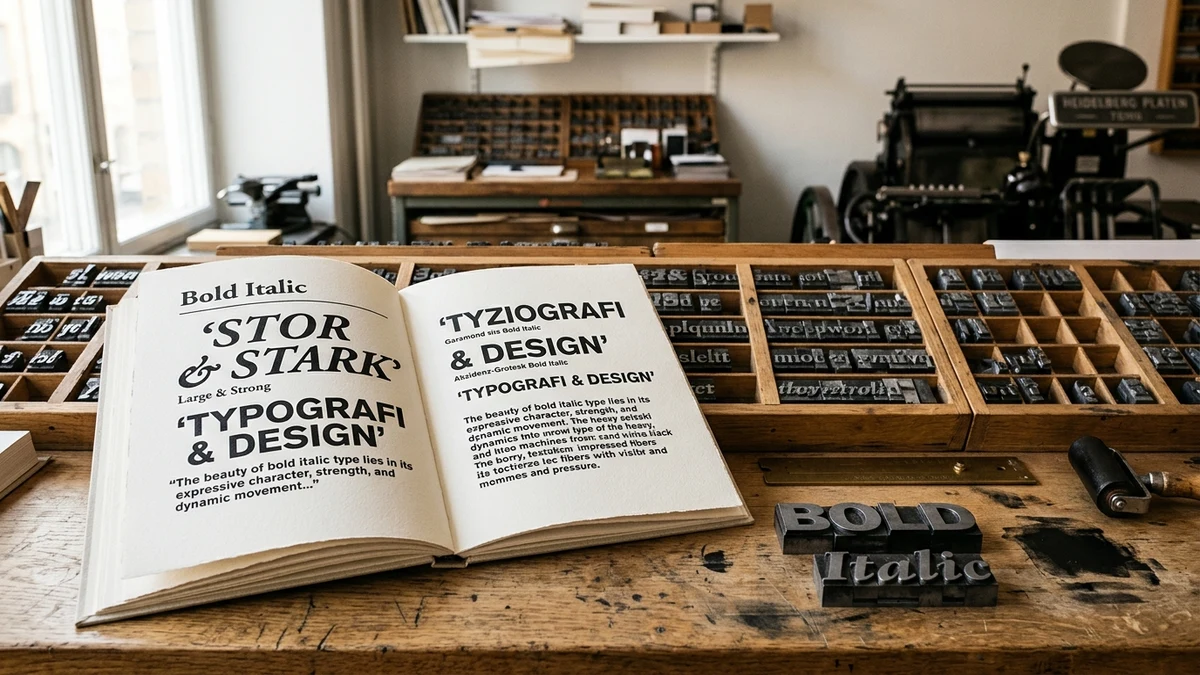
Typographic Telemetry
Step-by-Step Italic Font Generator Instructions & Specifications
The Bold, Italic & Underline Font Generators guide provides verified specifications, step-by-step instructions, and interactive calculation tools for italic font generator. Access technical tolerances, operational guidelines, and error-prevention checklists directly in your browser.
Generating verified bold and italic typography for social media posts requires understanding how Unicode Mathematical Alphanumeric Symbols translate across diverse client user agents. Our primary platform, the Social Media Post Formatter & Font Generator Master Hub, provides instant multi-style transliteration across all major Unicode character blocks.
Unlike web development environments where CSS declarations like font-weight: 700 or font-style: italic define styling, social platform publishers must submit raw character strings. Supplementary Multilingual Plane 1 provides dedicated alphanumeric character sets specifically reserved for scientific notations and technical manuscripts. By mapping standard Latin ASCII characters into these reserved codepoints, content creators achieve persistent emphasis that cannot be stripped away by automated feed filters.
Follow this standardized four-step authoring procedure to guarantee maximum typographical precision:
- 1 Input Drafting & Scope Definition: Enter your headline or key value proposition into the primary workbench textarea without manual markdown asterisks. Ensure that your core branded keywords and essential search terms remain unformatted to maintain search discoverability.
- 2 Style Calibration: Compare Mathematical Sans-Bold, Mathematical Sans-Italic, and Mathematical Sans Bold-Italic outputs in real time, inspecting character bounding boxes, word count totals, and UTF-8 byte weight overhead.
- 3 1-Tap Clipboard Copy: Click the Copy button on your preferred style to write the UTF-8 payload directly to your system clipboard with visual toast feedback. The engine validates that no surrogate pairs were severed during translation.
- 4 Broadcast Deployment: Paste directly into LinkedIn, X, or Threads feeds; glyphs render natively as styled symbols without requiring rich-text editor controls.
If your campaign requires striking out discounted prices or indicating deprecated specifications alongside emphasis, pair these styles with our dedicated Strikethrough Text Guide.
Interactive Bold Italic Fonts Sizing & Analysis Tool
Our interactive analysis engine calculates the exact byte expansion resulting from Plane 1 Unicode transliteration. Because mathematical symbols occupy 4 bytes per code point in UTF-8 versus 1 byte for standard ASCII, long posts containing excessive bold characters require careful character budgeting.
The built-in platform quota monitor tracks your active character count against platform ceilings (3,000 characters for LinkedIn, 280 for X, and 500 for Threads), warning you before hitting truncation boundaries.
On iOS and macOS systems, Apple's CoreText rendering engine draws mathematical alphanumeric characters using system fallback fonts that match San Francisco's x-height and optical weight. On Android devices, Roboto and Noto Sans provide glyph coverage across the U+1D600 series, ensuring cross-ecosystem visual consistency without font-rendering discrepancies.
Desktop Windows environments powered by DirectWrite map Mathematical Alphanumeric Symbols through Segoe UI Symbol or Cambria Math. Because these glyphs originate from universal character assignments established in Unicode 3.1, legacy character corruption is virtually non-existent on operating systems released within the last ten years.
Grapheme cluster boundaries represent an essential engineering distinction when processing astral plane mathematical characters. While standard Latin letters consist of single 16-bit code units, mathematical alphanumeric symbols occupy 32-bit scalar values requiring surrogate pair representation in JavaScript engines. FormatCleaner utilizes modern ECMAScript regex unicode flag support (/u and /v modifiers) alongside the Internationalization Segmenter API (Intl.Segmenter) to isolate exact user-perceived characters without severing complex grapheme clusters.
From an algorithmic feed distribution perspective, social discovery engines (such as LinkedIn's content classifier and X's neural ranking models) treat mathematical Unicode symbols with strict text normalization filters. Search ranking parsers map mathematical alphanumeric characters back to their base ASCII equivalents during search indexing, ensuring that your articles and posts remain discoverable in standard keyword searches while visually captivating readers browsing their algorithmic home feeds.
Critical Engineering Tolerances & Operational Standards
Statutory mathematical formula governing the transliteration of Latin alphabets into Mathematical Bold-Italic code points:
Mathematical Sans Bold-Italic Transliteration Model
Variable Definition & Units
Target Bold Italic Scalar Value (U+1D63C for A, U+1D656 for a)
Standard ASCII Latin Character Code (65-90 for A-Z, 97-122 for a-z)
Unicode Plane 1 Mathematical Sans Offset Constant
Operating Guidelines, Quality Adherence & Error Prevention
Publishers must avoid formatting continuous paragraphs of bold text. High-contrast typography is designed to emphasize pivotal data points, key findings, and hook sentences. Extensive body copy in Unicode mathematical symbols can impair reading velocity, degrade mobile legibility, and trigger screen reader fatigue for visually impaired audiences.
Always verify your formatted text in daylight viewing conditions and test your output on both iOS and Android before scheduling large campaign broadcasts. Maintaining high editorial contrast between unstyled body sentences and accented callouts guarantees optimal algorithmic reach and audience engagement across professional networks.
- Ratio Calibration: Maintain an 80/20 ratio between standard ASCII prose and formatted Unicode callouts to preserve visual balance.
- Auditory Accessibility: Visually impaired users relying on screen reading software will hear code point definitions spoken aloud; keep critical calls to action accessible.
- Hashtag Discipline: Never apply mathematical alphanumeric formatting to hashtags (e.g. #marketing). Platforms do not parse Unicode Plane 1 glyphs into active hyperlinked tags.
- Platform Rendering Parity: Validate your drafted post in preview mode across both dark mode and light mode interfaces to ensure that mathematical glyph contrast meets visual comfort thresholds across diverse display brightness settings.
| Unicode Typographic Style | SMP Code Range | Byte Overhead | OS Compatibility | Editorial Application |
|---|---|---|---|---|
| Mathematical Sans Bold | U+1D5D4–U+1D607 | 4 | iOS 10+, Android 7+, Windows 10+ | Headline Hooks & Critical Statistics |
| Mathematical Sans Italic | U+1D608–U+1D63B | 4 | iOS 10+, Android 7+, Windows 10+ | Quotes, Book Titles & Subtle Emphasis |
| Mathematical Sans Bold-Italic | U+1D63C–U+1D66F | 4 | iOS 10+, Android 7+, Windows 10+ | Primary Callouts & Key Takeaways |
| Mathematical Serif Bold | U+1D400–U+1D433 | 4 | iOS 10+, Android 7+, Windows 10+ | Formal Statements & Executive Bios |
| Mathematical Serif Italic | U+1D434–U+1D467 | 4 | iOS 10+, Android 7+, Windows 10+ | Academic Citations & Epigraphs |
Frequently Asked Questions About Bold Italic Fonts
Compiled answers and verification standards by the Unicode Engineering & Social Typography Research Desk.
What is the Unicode code point range for Mathematical Sans Bold Italic?
Mathematical Sans Bold Italic glyphs occupy range U+1D63C through U+1D66F in Supplementary Multilingual Plane 1. These code points exist alongside Mathematical Serif Bold Italic (U+1D468 to U+1D49B), providing distinct typestyle choices.
Why do some older Android devices show square boxes for bold italic characters?
Older system fonts without complete Unicode coverage may produce .notdef glyphs (tofu boxes). FormatCleaner provides multiple fallback stylings so users can deploy universally recognized font mappings across legacy and modern devices.
Can I combine bold italic fonts with underline or strikethrough?
Yes. Combining diacritical marks (such as U+0332 for underline and U+0336 for strikethrough) can be chained directly to Mathematical Bold Italic characters to generate compound visual styling.
Are bold and italic Unicode posts indexed properly by Google and LinkedIn search?
Yes. Major search engines normalize Unicode mathematical alphanumeric characters back to basic Latin ASCII during tokenization and inverted index construction, preserving core keyword discoverability.